
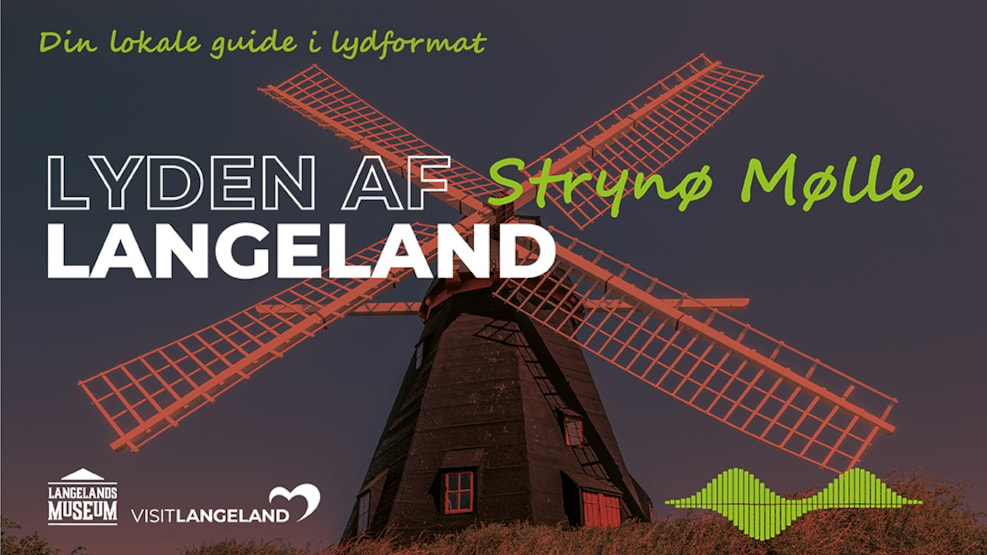
Podcast: Sounds of Strynø mill
Strynø Mill is more than just a beautiful relic from the past. It holds wonderful stories from island life and its agricultural community. In the section THE SOUND OF STRYNØ MILL, John Sørensen talks about the establishment of the mill and shares amusing stories about the creative farmers of Strynø.
In the podcast, we hear about the creation of Strynø Mill and the challenges the miller has faced with its location. Not least, the view of it and the fantastic coastline on the west side of Strynø is a real feast for the eyes.
A little about Strynø Mill
The mill was built by mill builder Mads Jørgensen from Ærø. The original Dutch mill still stands today. Originally, like most other mills, it was probably covered with straw or reeds. Today, the mill is covered with roofing felt.
Strynø Mill is located on the west side of the island opposite Strynø Kalv, right next to a landing stage.
Farmers from the other islands sailed here with their crosses. During ice winters, farmers travelled as far as Birkholm to get to Strynø Mill.
Read more about the mill here.
Activity
Just before the small fishing harbour, there is a footpath running south along the coast. Enjoy a lovely walk along the water and the beautiful view of the small neighbouring island of Strynø Kalv. On your walk along the coast, we recommend that you keep an eye on the water and the view towards Strynø Kalv – here you are very likely to spot one of the many seals that live in the area.
Seal safari:
The seal is a mammal that lives in coastal areas with small islands and sandbanks, where it can rest undisturbed.
Seals weigh up to 125 kg and can grow to a length of 2 metres. Seals are predators and feed on fish, which they swallow whole – without chewing their prey.
Seals give birth to their young during the summer months – if you see a seal pup lying on the beach, it is important that you do not go too close or touch it – the mother is nearby and will stay away if you are too close to the pup.